
Huawei has raised the bar for ultra-high-brightness smartphone OLEDs with the adoption of Tandem OLED in the Mate 90 Pro series. The Mate 90 Pro Max supports a peak brightness of up to 12,000 nits and delivers up to 6,000 nits even at 20% APL. By stacking multiple light-emitting units, Tandem OLED reduces the current load required to achieve a given brightness, providing advantages in high brightness, power efficiency, and lifetime.
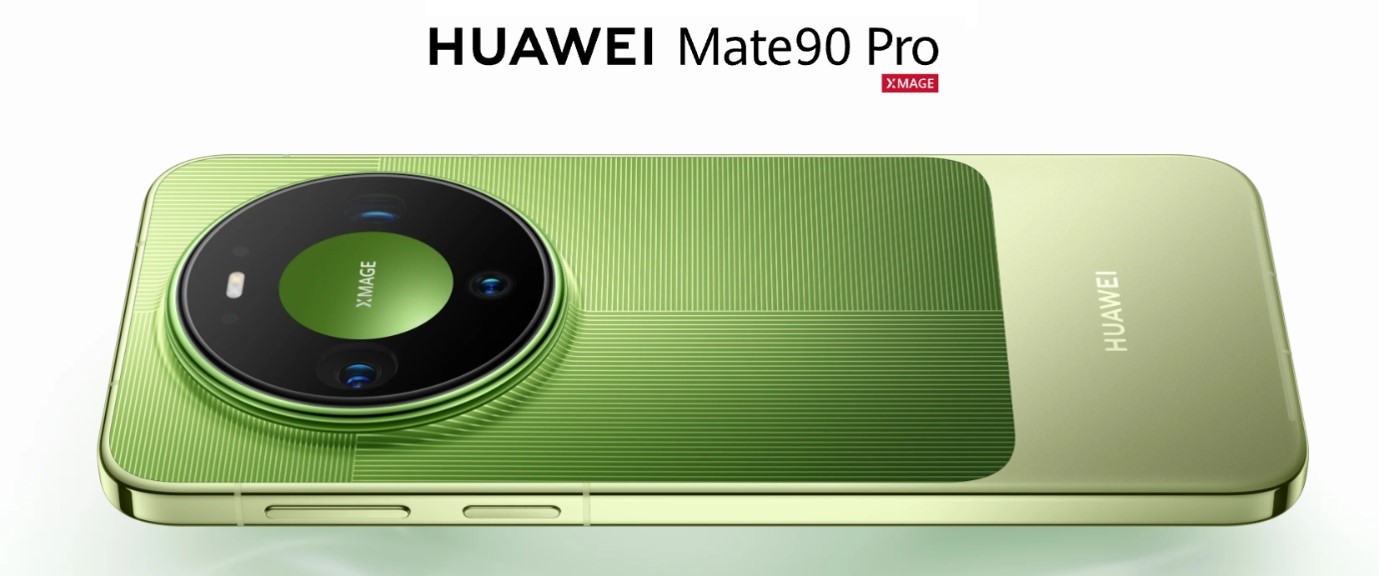
Huawei Mate 90 Pro (Source: Huawei)
Outdoor visibility is determined not only by display brightness but also by ambient illumination and screen reflectance. Recent premium smartphones have increasingly adopted anti-reflective cover glass and coatings, improving visibility under strong ambient light without relying solely on higher brightness. If screen reflectance is sufficiently reduced, 6,000 nits at 20% APL is not necessary to achieve an ambient contrast ratio (ACR) of 5, even under intense direct sunlight of 100,000 lux. The Mate 90 Pro’s ultra-high brightness therefore appears to have greater significance as a means of demonstrating Tandem OLED performance, enhancing HDR, and differentiating the product than as an essential requirement for outdoor visibility.
The longer-term value of Tandem OLED may instead lie in lower power consumption. Premium smartphones are beginning to move beyond simply adding generative AI features toward agentic AI, which can understand user context and intent and perform tasks accordingly. Qualcomm and MediaTek are strengthening on-device AI and low-power always-sensing capabilities in their latest flagship mobile platforms, while smartphone makers are expanding personalized AI and background AI functions.
The expansion of AI is changing how power is allocated among components such as the NPU, memory, and sensors. With physical constraints on battery capacity and thermal management, allocating more of the system power budget to AI processing increases the importance of reducing power consumption elsewhere, including the display. LG Display has also highlighted the potential of smartphone Tandem OLED to reduce power consumption compared with conventional single-stack OLEDs and thereby extend on-device AI usage time.
The Mate 90 Pro’s 12,000-nit specification can therefore be viewed as a symbolic demonstration of what Tandem OLED can deliver. However, the more important driver for broader Tandem OLED adoption in premium smartphones may ultimately be the demand for lower power consumption in the AI phone era rather than competition over extreme peak brightness. Whether the Tandem OLED demonstrated by the Mate 90 Pro remains a Huawei-specific high-brightness differentiator or develops into a low-power display solution for next-generation AI smartphones will be a key issue to watch in the smartphone OLED market.