
About five months after showcasing high-brightness and high-color-reproduction technologies for large-size OLED at CES 2026, LG Display introduced its automotive 3rd-generation Tandem OLED, an enhanced White OLED, and a 7-inch P-OLED for humanoid robots at SID 2026.
The most notable technology on display was the automotive 3rd-generation Tandem OLED, unveiled for the first time at the exhibition. LG Display commercialized the world’s first automotive Tandem OLED in 2019 and began mass production of its 2nd-generation product in 2023. Three years later, the company has now introduced its next-generation technology.
The 3rd-generation Tandem OLED reduces power consumption by 18% compared with the previous product and more than doubles its lifetime. It is designed to operate for more than 15,000 hours at room temperature under a high-brightness condition of 1,200 nits without image quality degradation. By optimizing hole and electron transport and applying a Deep Blue Dopant, LG Display has improved color purity, color gamut, brightness, power efficiency, and lifetime characteristics.
The technology is expected to enter mass production for automotive applications within this year, with potential expansion into IT OLED applications thereafter.
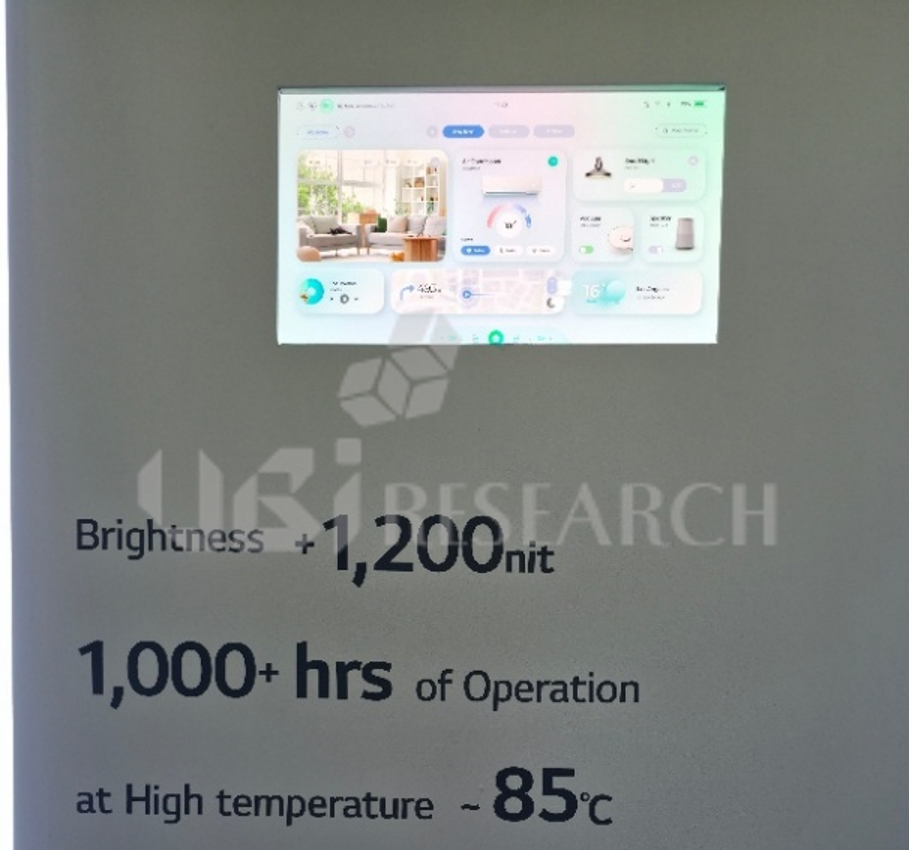
LG Display’s automotive 3rd Gen Tandem OLED exhibited at SID 2026. By reducing power consumption by 18% and doubling the lifespan, it further strengthens its competitiveness in the automotive display market. (Source: UBI Research)
In the large-size OLED segment, LG Display presented further improvements to its White OLED based on Primary RGB Tandem 2.0, which was first introduced at CES 2026. The product exhibited at SID 2026 increased full-white brightness from 450 nits to 500 nits, while expanding BT.2020 color gamut coverage from 84% to 90%. This represents a meaningful technology improvement aimed at strengthening the high-brightness and wide-color-gamut performance required for OLED TVs and premium monitors.
The performance enhancement is believed to have been achieved by applying a hybrid green fluorescent approach instead of a pure green phosphorescent structure, thereby improving both efficiency and color reproduction.
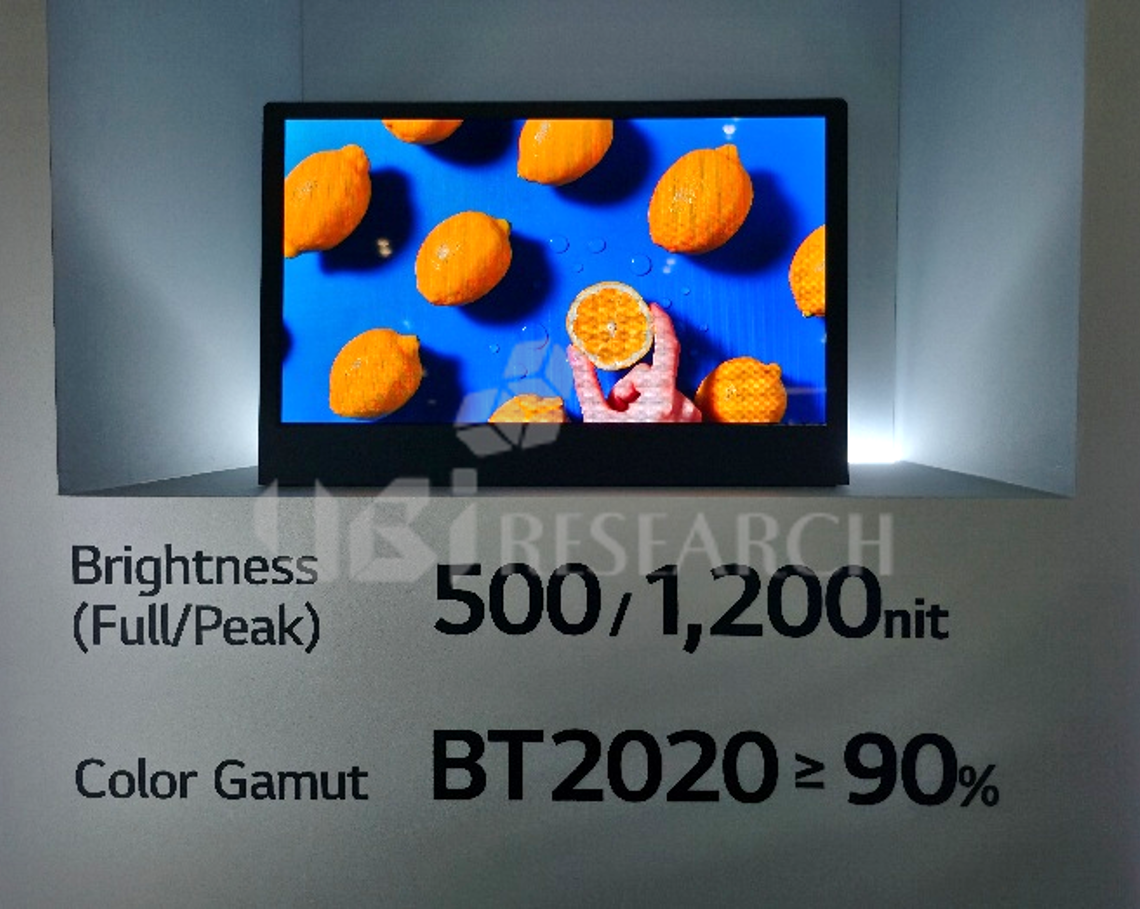
Evolved White OLED based on Primary RGB Tandem 2.0 unveiled at SID 2026. With significantly improved brightness (500 nits) and color gamut (BT.2020 90%), it targets the premium TV and monitor markets. (Source: UBI Research)
As a new application area, LG Display presented a display designed for humanoid robots. This product is a 7-inch P-OLED that incorporates automotive Tandem OLED technology. With its high degree of design flexibility, P-OLED can support various exterior designs required by different robot manufacturers. Going forward, it is expected to be used as a robotic display for facial expressions, user interfaces, and emotional communication.
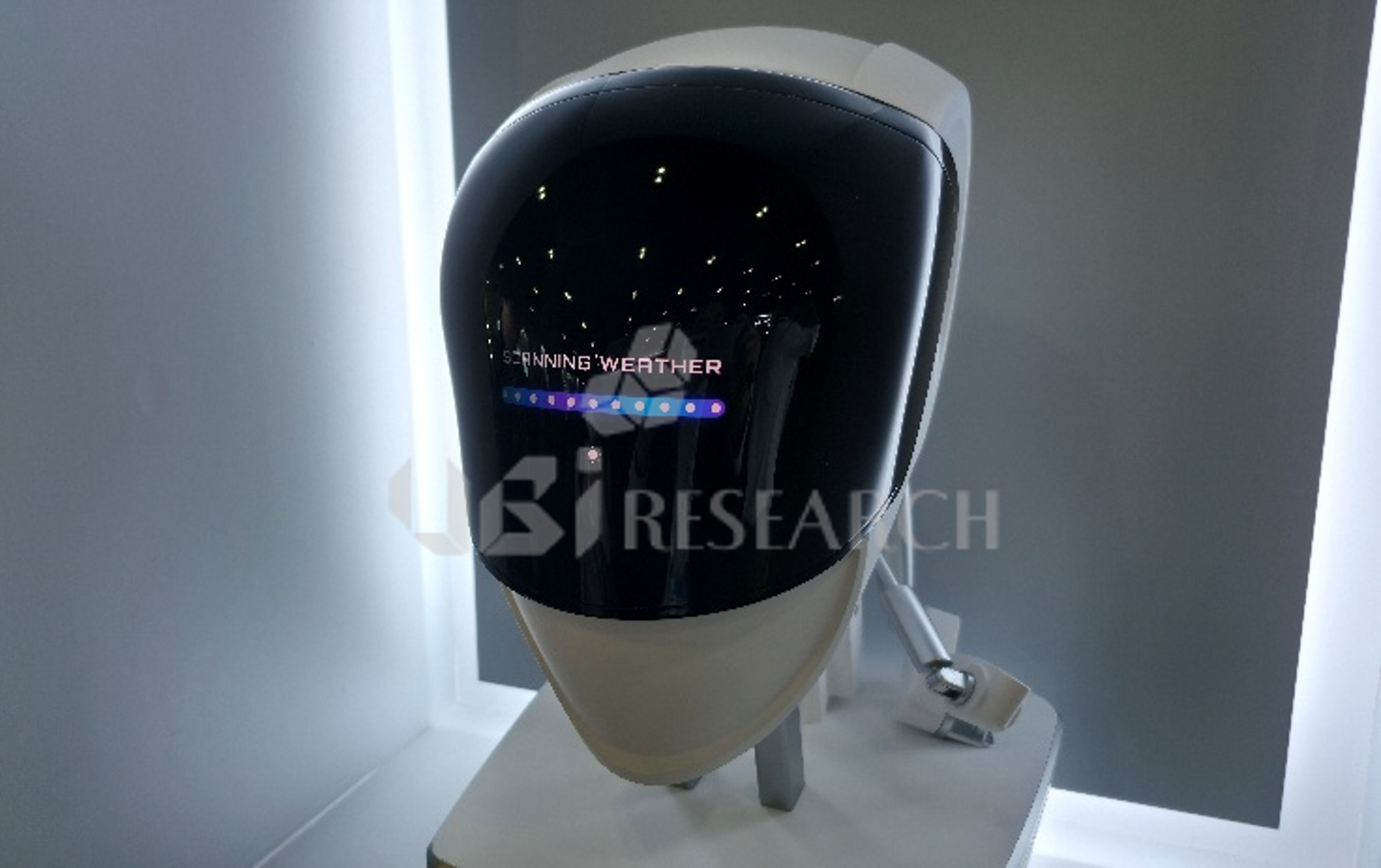
The newly introduced 7-inch P-OLED for humanoid robots by LG Display. Based on tandem technology, it offers high design flexibility and is expected to be used for robotic facial expressions and user interfaces. (Source: UBI Research)
The SID 2026 exhibition demonstrates that LG Display’s OLED strategy is expanding beyond large-size TVs into automotive, IT, and robotic display applications. In particular, the mass-production readiness of its automotive 3rd-generation Tandem OLED and the improvements in brightness and color reproduction of its White OLED highlight LG Display’s continued efforts to differentiate its technology in the premium OLED market.
Changwook Han, Executive Vice President/Analyst at UBI Research (cwhan@ubiresearch.com)
▶2026 Analysis Report on China’s OLED Supply Chain Management
▶2026 Small OLED Display Annual Report
▶2026 Medium & Large Size OLED Display Annual Report
※ This article is produced by UBIResearchNet.
Unauthorized reproduction or citation without source attribution is prohibited.
When quoting, please clearly indicate the source (UBIResearchNet) and provide a link.