
On November 3, Mercedes-Benz shared the development status of its display technology that embeds mini LEDs and micro LEDs in vehicle glass through “Intelligent Display in Glass.” The technology aims to use vehicle windows as display surfaces for communicating information to people outside the vehicle.
LED elements are embedded within laminated glass, remaining almost invisible under normal conditions and displaying text and graphics when needed. Potential uses include warnings and traffic-related information on the rear window, as well as charging status on the rear side windows. Mini LEDs are suitable for larger areas, while micro LEDs are suited to smaller areas displaying high-resolution graphics and animations.
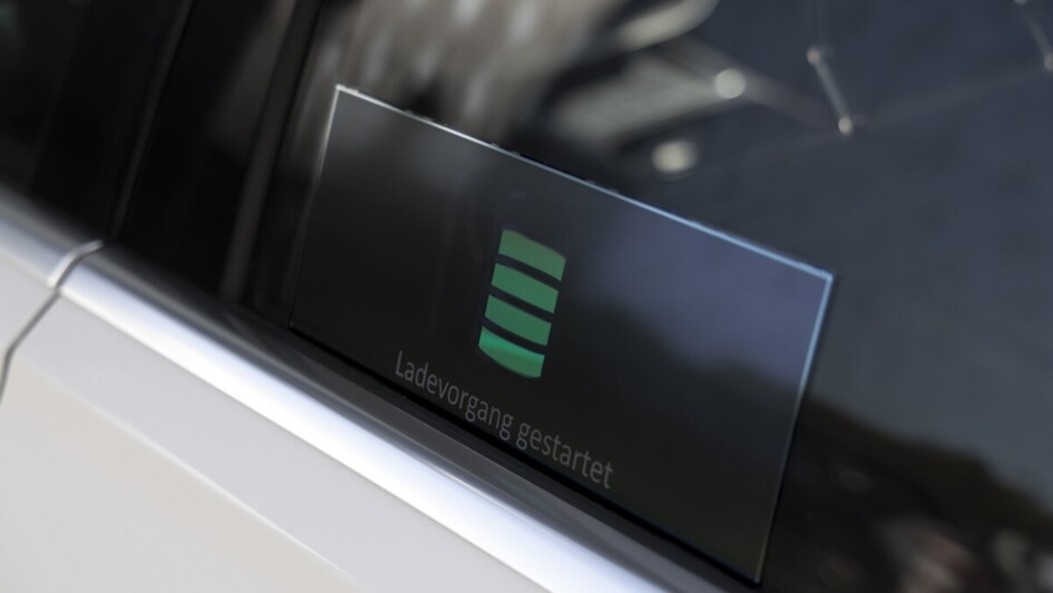
Micro LED charging status display on a Mercedes-Benz side window (Source: Mercedes-Benz)
With their high brightness and small pixel size, micro LEDs offer advantages in combining transparency with high resolution. They can also provide good visibility in automotive environments exposed to strong ambient light. However, simple information such as warnings and charging status can also be displayed using mini LEDs, so the actual applications for micro LEDs in vehicle glass may be limited by their higher manufacturing costs.
Light transmittance requirements for vehicle glazing may also influence where the technology can be deployed. UNECE Regulation No. 43, applied in Europe and other markets, does not require 70% light transmittance for rear side windows, allowing lower transmittance levels. By contrast, the U.S. federal standard FMVSS 205 generally requires at least 70% visible light transmittance for rear side windows in passenger cars. These differences suggest that transparent micro LEDs for automotive applications may be easier to introduce in Europe than in the United States.