
Rayvision Technology disclosed nine Micro OLED products on September 15. The combination of full-color and high-brightness monochrome models points to a strategy that targets not only AR and VR but also industrial applications such as thermal imaging and night-vision optics.
Reporting & Analysis: UBI Research Editor: Dr. Choonghoon YI, CEO & Chief Analyst
A lineup of 0.39- to 0.96-inch Micro OLED products from Chinese manufacturer Rayvision Technology was listed on OLED Marketplace on September 15, 2026. Nine products were disclosed. Key specifications include 0.39-inch 1024 × 768, 0.60-inch 800 × 600, 0.61-inch 1280 × 1024, 0.71-inch 1920 × 1080, and 0.96-inch 1400 × 1050 panels.
The portfolio includes both full-color and high-brightness monochrome models. According to information published by OLED-Info, some red and green monochrome products are specified at 10,000 nits, while a 0.96-inch monochrome product is rated at up to 16,000 nits. These figures are supply specifications published on the sales platform and do not represent optical-system efficiency or the actual brightness reaching the user’s eye in a finished device.
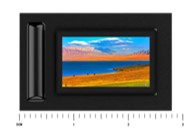
Rayvision RAY071-19201080 0.71-inch Full HD OLED microdisplay. Product image: OLED Marketplace
Full-color Micro OLEDs primarily target AR and VR headsets and electronic viewfinders. Monochrome products are better suited to thermal-imaging equipment and night-vision optics, where high brightness, contrast, and visibility in low-light conditions are more important than color reproduction. Even with the same silicon backplane, certification requirements diverge because each application demands a different emission structure and driving condition.
Dr. Choonghoon YI, CEO of UBI Research, noted that publishing a nine-model catalog does not immediately translate into high-volume shipments. The disclosure is meaningful because it confirms the available range of display sizes and resolutions. Assessing commercial competitiveness, however, also requires information on full-color brightness, power consumption, lifetime, pricing, delivery lead times, and customer qualification status.
OLED-Info reported that Rayvision began operating an 8-inch silicon OLED production line in Guangxi in 2023 and is constructing a 12-inch production line in Changsha. Moving to 12-inch wafers could increase the number of chips per wafer, but actual cost competitiveness will depend on yield, product area, and process complexity.
Rayvision’s business expansion will depend on which of the nine specifications generate repeat orders. Products that meet the color-quality and power requirements of consumer AR devices may differ from those that secure long-term supply contracts for industrial optical equipment. Customer qualification and sustained orders must be confirmed before the pace of business expansion can be assessed, regardless of production-capacity plans.
Sources: OLED-Info, ‘Rayvision’s complete OLED microdisplay line is now available on the OLED Marketplace’ (2026-09-15) · OLED-Info, Rayvision Technology company profile · OLED Marketplace, Rayvision RAY071-19201080