
With the emergence of next-generation wearable devices and the AI/AR terminal market, competition for leadership in ultra-small Micro-LED displays is intensifying. At “SID Display Week 2026,” Chinese tech startup STARKSEMI unveiled an Integrated Device Manufacturer (IDM) model that fully integrates semiconductor processes. STARKSEMI is the first company in the world to successfully establish an “8-inch Micro-LED pilot mass production line” that integrates all processes—including epitaxy, heterogeneous integration, and chip testing—into a single system. The company is currently building a 12-inch mass production line and aims to supply next-generation display solutions capable of high stability, high efficiency, and mass production—essential for XR/AR devices.
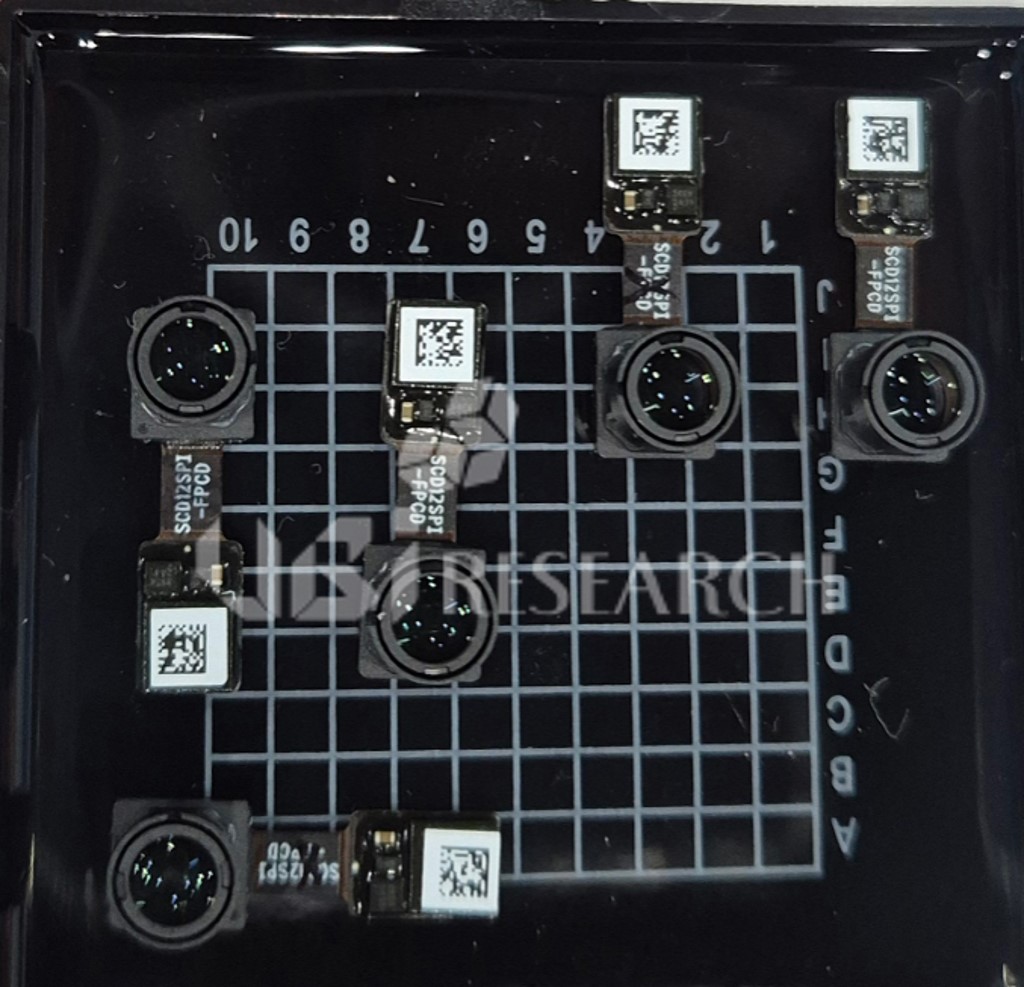
Microdisplay optical engine development products unveiled at SID Display Week 2026. STARKSEMI aims to supply ultra-small micro-LED display solutions essential for next-generation XR/AR devices. (Source: UBI Research)
- Convergence of Semiconductor Processes and Ultra-Precision Hybrid Bonding
The core competency that STARKSEMI emphasizes is its “large-scale silicon-based gallium nitride (GaN-on-Silicon) + hybrid bonding” technology framework. Introduced to overcome the limitations of conventional processes, Hybrid Bonding technology has improved the precision of heterogeneous integration between micro-LED wafers and CMOS driver wafers, while resolving yield issues in ultra-fine processes. Furthermore, large-scale silicon-based GaN technology is compatible with semiconductor foundries’ advanced CMOS manufacturing systems, enabling cost reductions in mass production and facilitating miniaturization.
- Key Technologies and Process Infrastructure at STARKSEMI
– Business Model: Vertically Integrated Manufacturing (IDM) Model (Integration of all processes prior to epitaxy, heterogeneous integration, and chip testing)
– Production Line Status: Establishment of the world’s first 8-inch Micro-LED pilot mass production line and commencement of planning and construction for a 12-inch mass production line
– Heterogeneous Integration Technology: Overcoming precision and yield limitations between wafers using ultra-precision hybrid bonding technology
– Substrate compatibility: Supports large-scale silicon-based gallium nitride (GaN-on-Si) and is compatible with advanced CMOS process technologies
- The Key to Differentiation: A “Dual Red Light” Strategy Combining Ternary InGaN and Quaternary AlInGaP
The key technological differentiator unveiled by STARKSEMI at SID 2026 is its “dual red light” strategy. A common industry challenge for ultra-small micro-LED displays is the reduced efficiency of red micro-LEDs. To address this, STARKSEMI opted to simultaneously utilize two red light technologies—‘terary InGaN’ and ‘quaternary AlInGaP’—rather than relying on a single technology path.
While tetravalent AlInGaP materials offer excellent red light efficiency in large LEDs, they have a critical weakness: when scaled down to the micrometer (μm) level, the rate of surface non-radiative recombination (SNR) increases dramatically, causing efficiency to plummet. On the other hand, ternary red InGaN LEDs are advantageous for miniaturization, but they face limitations due to material quality issues, such as lattice defects, that arise when increasing the indium (In) content to achieve red light emission. STARKSEMI is developing these two technologies, which have opposing strengths and weaknesses, in parallel and is selecting the optimal chip through product testing.
STARKSEMI plans to widen the cost gap with its competitors by adhering to a dual-track R&D strategy—which involves highly complex technologies—while maximizing the mass production advantages of silicon-based gallium nitride processes. Whether the company’s unique dual red-light strategy and integrated IDM process will translate into definitive dominance and a competitive edge in actual mass production ultimately depends on its ability to move beyond the laboratory stage and on the depth of its control technologies. Further progress toward commercialization is anticipated.
Namdeog Kim, Senior Analyst at UBI Research (ndkim@ubiresearch.com)
▶UBI Research’s Micro Display Report
▶UBI Research’s Micro-LED Report
※ This article is produced by UBIResearchNet.
Unauthorized reproduction or citation without source attribution is prohibited.
When quoting, please clearly indicate the source (UBIResearchNet) and provide a link.