
Samsung Display Exclusively Supplies 4 Types of OLEDs for Ferrari’s New Car ‘Luce’
□ ‘Luce,’ fully unveiled at the ‘World Premiere’ in Italy on the 25th, completes an ‘innovative design’ by layering two OLEDs and integrating physical needles
□ Achieves visual depth and a mechanical aesthetic with OLEDs that support original engineering·design
□ Features the world’s largest physical hole… Resolves reliability and driving optimization challenges that escalate with size
□ Ferrari “Samsung Display perfectly supports Luce’s design philosophy… Will deliver an unprecedented cockpit experience”
□ Samsung Display “A monumental collaboration integrating years of know-how… Broadens the horizon of automotive design”
Samsung Display will exclusively supply four types of OLED displays for Ferrari’s new car, the ‘Ferrari Luce’. The innovative interior design of the Ferrari, fully unveiled the previous day, was perfected through Samsung Display’s unrivaled OLED technological prowess.
Samsung Display announced on the 26th that it will exclusively supply four types of OLED panels for the electric sports car ‘Ferrari Luce’, which was completely unveiled by Ferrari during its ‘World Premiere’ event in Italy on the 25th (local time).
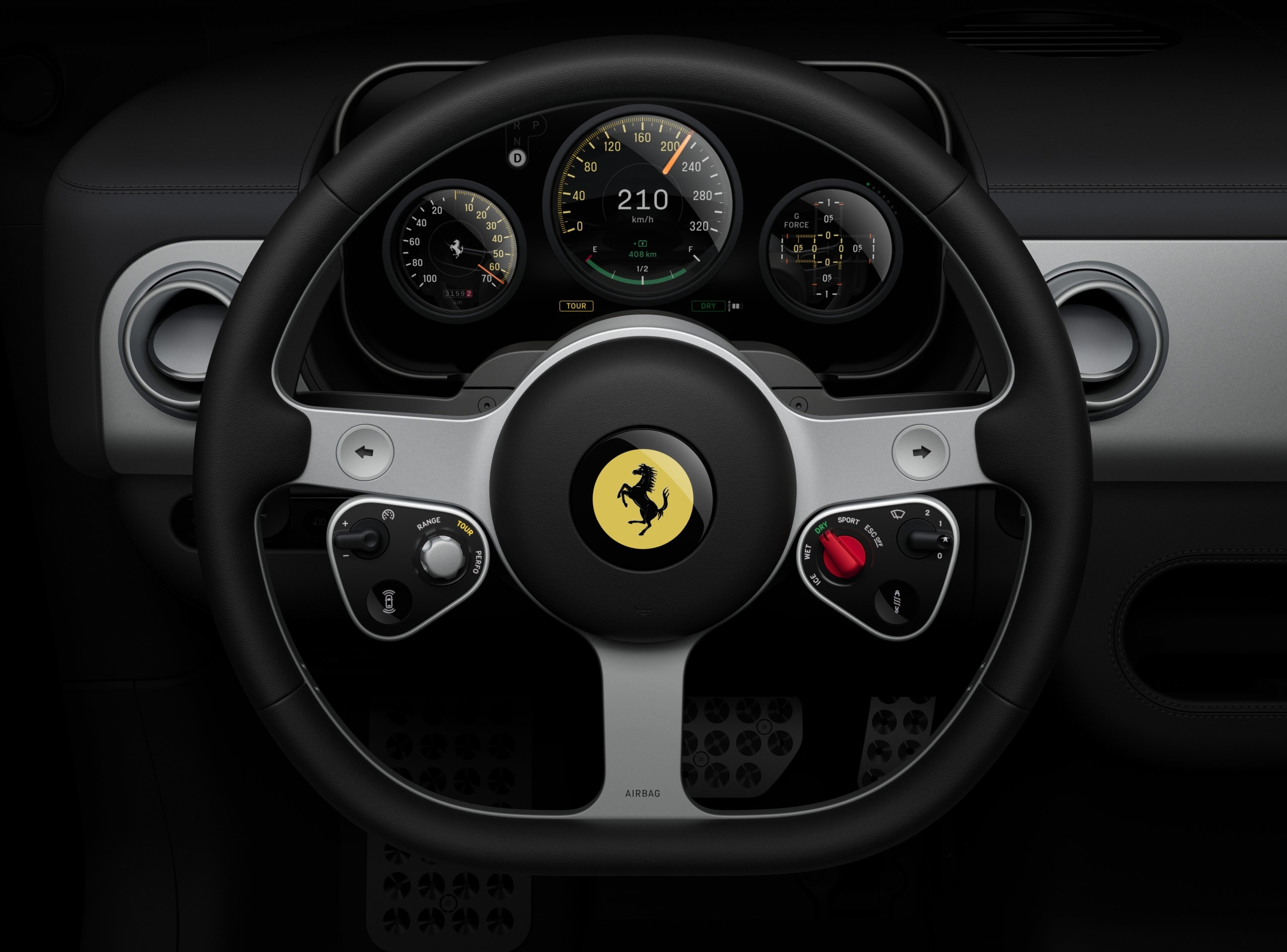
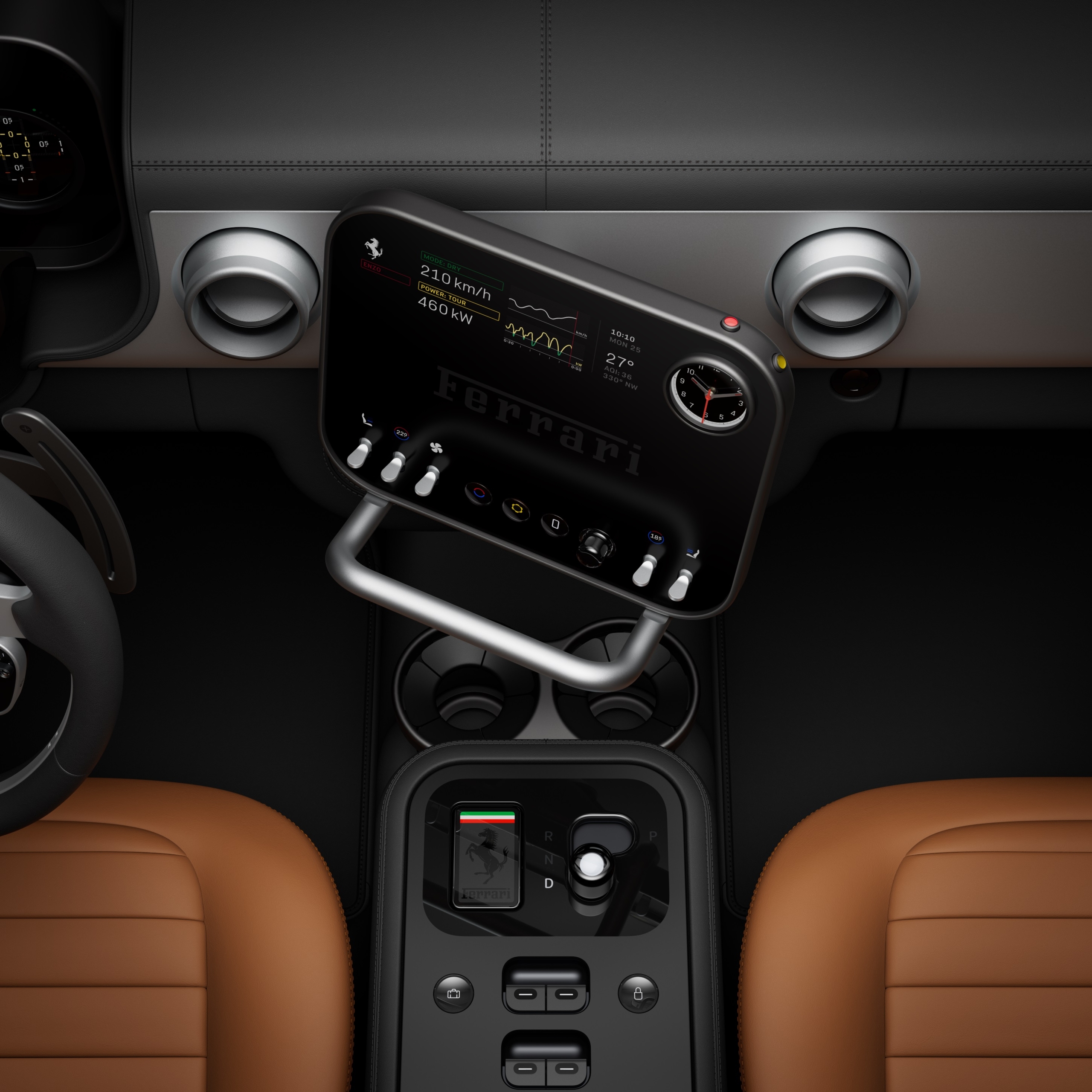
The Luce is equipped with three digital displays: ▲ a driver binnacle in front of the driver’s seat ▲ a control panel for managing the HVAC system and media ▲ a rear-seat control panel where passengers can control the HVAC system and view driving information. Samsung Display supplies a total of four OLED types for these: ▲ 12.9-inch ▲ 12-inch ▲ 10.1-inch ▲ 6.3-inch.
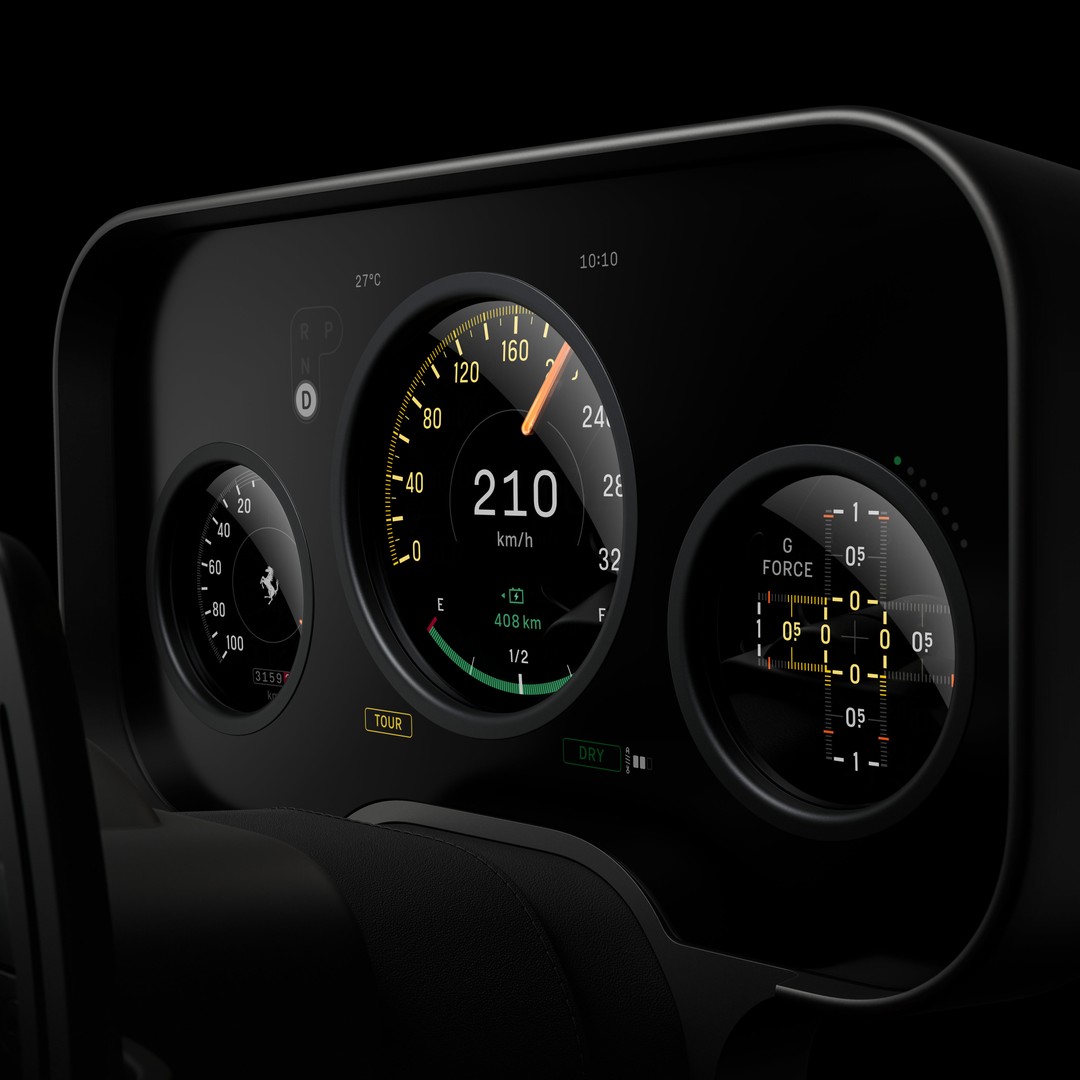
One of the most notable features of this new car is the driver binnacle. A binnacle refers to the cluster structure containing the speedometer and driving information, where traditionally, needles connected to the drivetrain move mechanically to display data.
The driver binnacle of the Luce applies the industry’s first multi-layered display design, in which two OLEDs—a 12.9-inch and a 12-inch—are layered three-dimensionally. The 12-inch panel located on the bottom layer displays the basic background and indexes. The 12.9-inch panel overlaid on top has three circular holes to view the images of the first-layer panel, and displays real-time torque, pop-up messages, and warning lights around the perimeter of these holes. Through this multi-layered design, it achieves an analog sense of reality that differentiates it from conventional 2D digital displays. In particular, the needle physically moves within the space between the panels, providing the driver with a highly three-dimensional and spatial operational experience.
Samsung Display was able to realize Ferrari’s original design thanks to its advanced ‘Big Hole’ processing technology. Typically, the diameter of a hole for a smartphone’s front camera is within 5mm, but the diameter of the holes applied to the Luce driver binnacle is about 100mm, which is 20 times larger. The company had to solve not only the sophisticated ‘Thin Film Encapsulation (TFE)’ technology—which prevents the OLED organic materials from coming into contact with moisture and air at the cut edge—but also the issues of signal distortion and the resulting drop in image uniformity that can occur as driving signals bypass the ‘Big Hole’. Samsung Display applied a proprietary design optimized for the characteristics of each signal, minimizing signal distortion and delay to achieve uniform and stable image quality.
Samsung Display has accumulated related design and manufacturing know-how by applying the so-called ‘HIAA (Hole in Active Area)’ technology—which punches a hole in the active display area—for a long time, including commercializing the hole display for the first time in the industry in 2019. In fact, Samsung Display has registered over 500 patents related to HIAA technology.
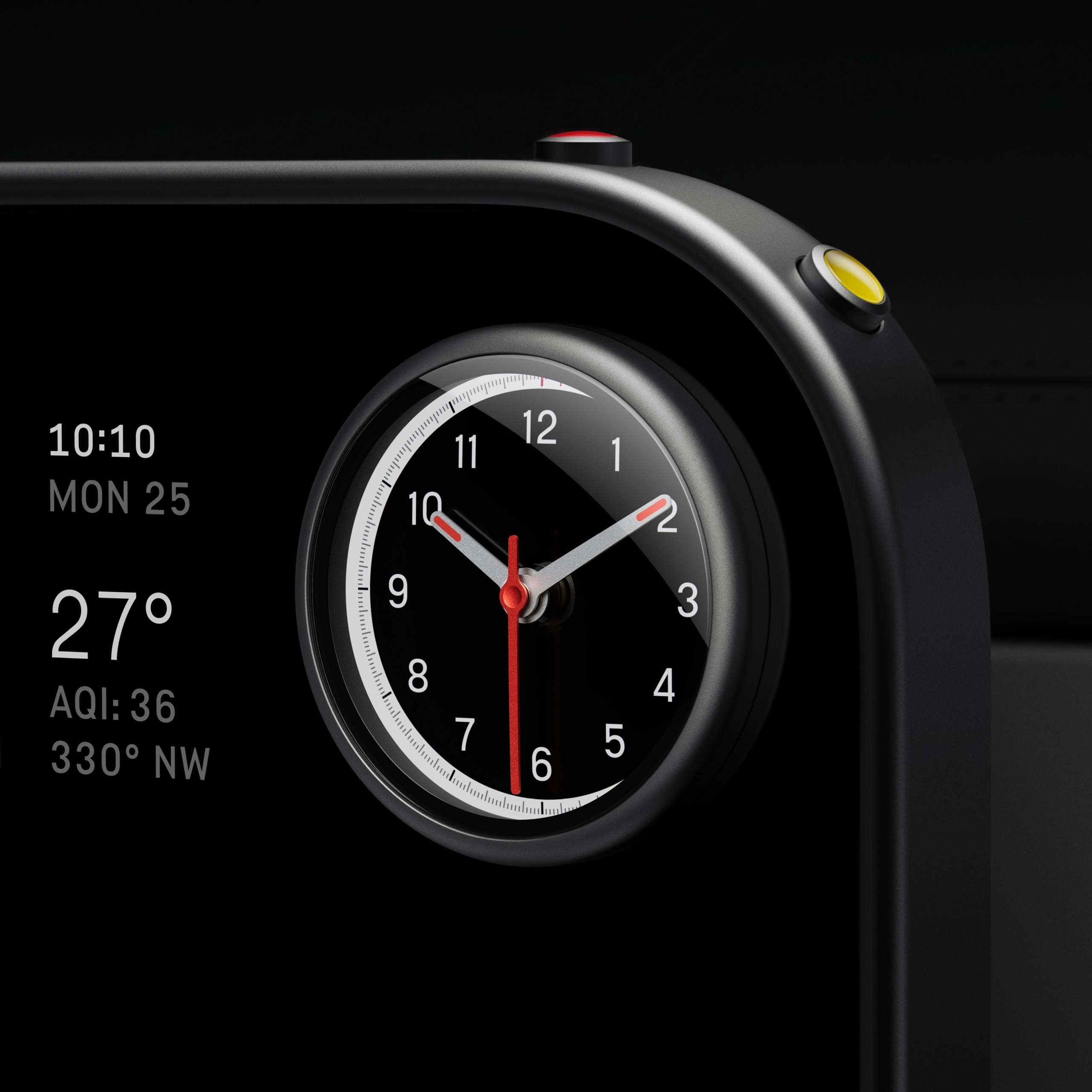
The 10.1-inch OLED is mounted on the central control panel that operates the climate control system and media, and HIAA technology is applied here as well. The multi-graph located at the top of the control panel digitally displays various information by switching modes such as a clock, stopwatch, and compass. Here, three actual mechanically operating needles are fixed through small holes punched in the panel and rotate 360 degrees. The 6.3-inch OLED is installed in the rear-passenger control panel located behind the center console, allowing passengers to directly check driving information and control the climate system.
The Luce is considered a prime example of collaboration that proves why OLED is the optimal solution for premium vehicles. Unlike conventional LCDs, OLEDs do not require a backlight and have a simple structure, allowing for free-form design processing. Ferrari expected the panel to blend naturally with the modules inside the binnacle, and Samsung Display increased Ferrari’s design freedom by processing the OLED into a free-form shape composed of various straight lines and curves, rather than a perfect square. The fact that OLED is significantly thinner than LCD was also a background factor that effectively supported Ferrari’s design. In addition, unlike LCDs that must always keep the backlight on, OLEDs only need to turn on the pixels in the area where the image is displayed, thereby increasing the vehicle’s power efficiency.