
On August 11, Xiaomi announced the REDMI K100 Pro series, revealing that the devices feature panels utilizing pTSF (phosphor-assisted TADF-sensitized fluorescence), a fourth-generation OLED material. Xiaomi named this material system “M11” and emphasized that it was the result of over two years of joint development with Professor Lian Duan’s team at Tsinghua University, noting that it is “the first Chinese device manufacturer capable of independently developing materials all the way to the light-emitting material stage.” Immediately following the announcement, TCL CSOT officially announced that it is the exclusive supplier of panels for the K100 Pro series, explaining that it has applied its newly developed “C11 light-emitting material” to these panels. This means that the set manufacturer and the panel manufacturer are referring to the same material system by different names.
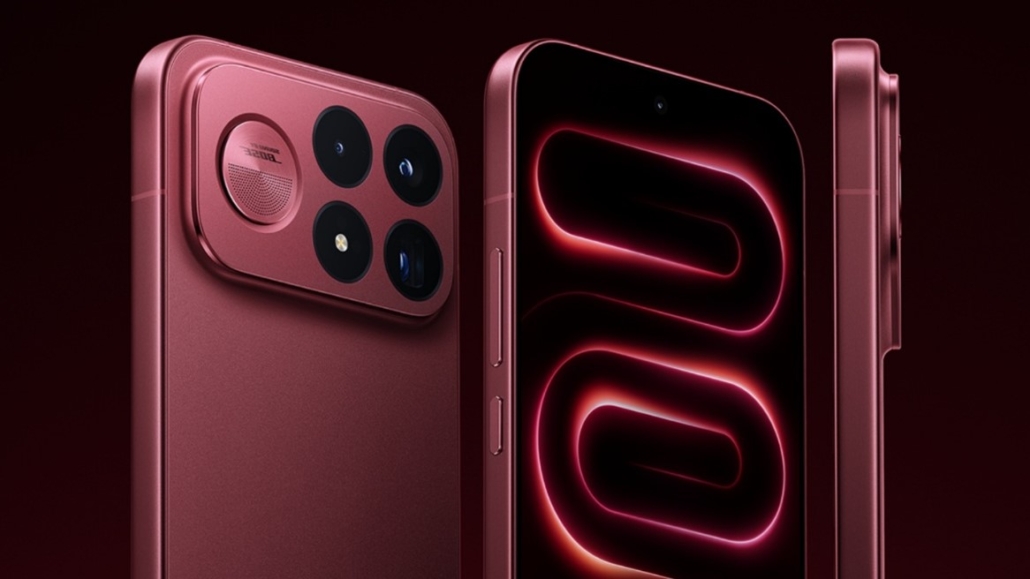
Xiaomi REDMI K100 Pro series (Source: Xiaomi)
pTSF utilizes three materials in the emissive layer: a host with TADF properties, a phosphorescence assistant, and a narrow-band fluorescent dopant. When the TADF host captures an electrically generated exciton, the phosphorescent assistant accelerates the transfer of triplet energy, and the narrow-band fluorescent dopant is responsible for the final light emission. This simultaneously ensures high luminous efficiency at the phosphorescence level and the color purity and lifetime characteristic of fluorescence, while suppressing efficiency roll-off in the high-brightness range.
Based on the K100 Pro, the panel specifications include a 6.59-inch display with a resolution of 2510×1156 and a maximum refresh rate of 185 Hz. Peak brightness is 4,500 nits at 25% window area and 10,000 nits at 1% window area, and the color gamut is reported to cover 90% of BT.2020 based on hardware specifications. Xiaomi explains that the adoption of the M11 has improved the green subpixel luminous efficiency by 20%, the overall panel efficiency by 8%, and the device lifespan by 5.2%.
Xiaomi has also implemented the “Real RGB” superpixel array, which independently places red, green, and blue subpixels for each pixel. Unlike the diamond pentile arrangement, which shares subpixels between adjacent pixels, this arrangement preserves the color information for each pixel, reducing color bleeding at the edges of text while also reducing the light-emitting area per subpixel, thereby increasing current density at the same luminance. The improved green efficiency of M11 could help mitigate the higher current-density requirements associated with the Real RGB configuration..
UBI Research notes that pTSF is moving beyond the stage of being a technology used by only a single panel manufacturer. Following Visionox’s initial application of pTSF in mass production in the fourth quarter of 2025, TCL CSOT has now joined the ranks. If the technology spreads to companies such as BOE and Tianma in the future, a supply structure is expected to emerge in which narrow-band green OLED material suppliers secure multiple clients. The recent REDMI case represents an instance where a device manufacturer directly participated in setting the specifications for light-emitting materials by leveraging investments in joint research centers and volume guarantees. Traditionally, technologies originating from university laboratories would undergo trial production by material suppliers and validation by panel manufacturers before being adopted by device manufacturers. In this case, Xiaomi’s involvement from an earlier stage appears to have shortened parts of that development process. Whether this device-manufacturer-led development model will spread throughout the Chinese smartphone industry as a whole remains a key point to watch.
Changho Noh, Senior Analyst at UBI Research (chnoh@ubiresearch.com)
▶2026 OLED Emitting Materials Report
※ This article is produced by UBIResearchNet.
Unauthorized reproduction or citation without source attribution is prohibited.
When quoting, please clearly indicate the source (UBIResearchNet) and provide a link.