
- Overview: H2 2026, an Inflection Point for the XR Market
September and October 2026 brought a rapid succession of major announcements in the XR industry. On September 14, Valve disclosed the price of Steam Frame and opened reservations. In late September, Meta unveiled Meta VR Glasses, the third-generation Ray-Ban Meta and camera-free audio glasses at Connect 2026. On October 7, XREAL finalized the price of Aura, its AR glasses based on Android XR. Around the same time, Samsung announced that its AI glasses had passed U.S. FCC certification and would launch in November.
Three trends run through these announcements. First, puck-type designs that take weight off the face have become mainstream. Second, sales growth is overwhelmingly driven by AI glasses without displays. Third, as Micro-OLED (OLED on Silicon) adoption expands in premium devices, the microdisplay supply chain is being reshaped. This report reviews the three trends device by device and draws implications from display and optics perspectives.
- Form Factor Shift: From Headsets to ‘Puck-Type Glasses’
2.1 Meta VR Glasses
Meta VR Glasses is Meta’s first non-LCD headset since the first-generation Quest in 2019. It drives micro-OLED panels with a resolution of 2,412×2,288 per eye at up to 120Hz, achieving 37 PPD, the highest of any Meta product. The optics are custom-designed ultra-compact pancake lenses, and the field of view is 70° horizontal × 66° vertical. Dolby Vision and HDR10 are supported.
The compute unit, consisting of the Snapdragon Reality Elite, 12GB of memory and 128GB of storage, sits in the puck. As a result, the glasses weigh about 100g, roughly one-fifth of Quest 3. The price is $1,299.99, with launch in spring 2027. However, its field of view is narrower than that of Quest 3, so the design is seen as trading some immersion for comfort and sharpness.
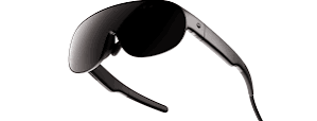
Figure 1. Meta VR Glasses (Image: Meta)
2.2 XREAL Aura
XREAL Aura is the first Android XR-based optical see-through glasses, co-developed by XREAL, Google and Qualcomm. The display is a Sony micro-OLED with a resolution of 1,920×1,200 per eye, driven at up to 120Hz. Combined with prism optics, it achieves a 70° field of view (diagonal) and 32 PPD, with an official peak brightness of 1,050 nits. The glasses weigh 95g. The puck houses the Snapdragon Reality Elite, while the glasses contain XREAL’s X1S spatial co-processor. Prices are $1,279 for the 12GB/256GB model and $1,499 for the 16GB/512GB model, about $20 below Meta VR Glasses. First shipments will reach the United States, Canada, Japan and Korea before the end of the year.
At AWE 2026, the sharpness and color of the virtual screen exceeded expectations, but the narrow perceived vertical field of view caused by the 16:10 panel was cited as the biggest weakness. Electrochromic dimming can be adjusted in five steps, enabling switching between AR and VR. However, due to the nature of prism optics, full see-through transmittance cannot be secured, so the real world always appears darker. The compute puck weighs about 300g, and pressure on the bridge of the nose and the ears was reported after 30 minutes of wear.
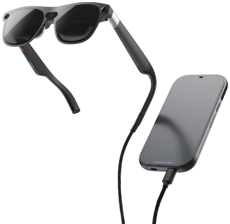
Figure 2. XREAL Aura with compute puck (Image: XREAL)
2.3 Pico Space Pro and Apple’s Next Plans
Pico, a subsidiary of ByteDance (字节跳动), unveiled its next-generation flagship, known as Project Swan, under the name Space Pro. Equipped with micro-OLED of about 4,000 PPI, it achieves an average of 40 PPD and over 45 PPD in the center. Pico also said that a dual-chip architecture combining its in-house XR chip with a flagship SoC reduces latency to 12ms. However, it cancelled its September 2 launch event in Beijing and postponed the release to Q4, and it has since been confirmed to have received FCC certification. The weight of about 270g is based on press reports and has not been officially confirmed.
While Apple maintains the M5 Vision Pro ($3,499), Bloomberg reported on September 27 that it is developing its next Vision Pro (codename N224) for late 2028 to early 2029. One of the four concepts under review separates the compute unit and battery into a puck. The fact that even the industry leader is considering a puck-type design shows that this architecture has become a common solution across the industry.
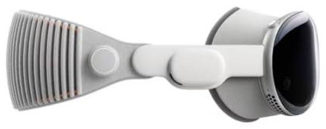
Figure 3. Apple Vision Pro (M5) (Image: Apple)
Assessment: Puck-type glasses have reduced the weight on the face to around 100g, but they are still far from the 50g often cited as the threshold for all-day wear. The current generation is best viewed as ‘session-type’ devices worn for set periods, such as watching movies, working or using them on flights.
Table 1. Key XR Devices, H2 2026
| Device | Category | Display | Optics | Res. / eye | FOV | Weight | Price (USD) | Availability |
| Meta VR Glasses | VR, puck | Micro-OLED | Pancake | 2412×2288 | 70°H×66°V | ~100 g | 1,299.99 | Spring 2027 |
| XREAL Aura | OST AR, puck | Micro-OLED (Sony) | Prism | 1920×1200 (32 PPD) | 70° | 95 g | 1,279 / 1,499 | Late 2026 |
| Pico Space Pro | MR, split | Micro-OLED (~4,000 PPI) | Pancake | ~40 PPD avg. | n/d | ~270 g | TBA | Q4 2026 |
| Valve Steam Frame | VR, standalone | LCD | Pancake | 2160×2160 | ~110° | 440g | 1,059 / 1,299 | Sep 2026 |
| Samsung Galaxy XR | MR, standalone | Micro-OLED 1.3″ | Pancake | 3552×3840 | n/d | 545g | ~1,800 | Oct 2025 |
| Snap Specs | OST AR, standalone | LCoS | Waveguide | n/d | 51° | ~136 g | 2,195 | Fall 2026 |
| Samsung AI glasses | AI glasses | None | – | – | – | n/d | TBA | Nov 2026 |
Source: company announcements. n/d = not disclosed.
- AI Glasses: The Real Driver of Shipment Growth
In H1 2026, global AI glasses shipments grew by about 250% year over year. Shipments of display-less products and of Meta rose by a similar margin. AR & AI glasses equipped with displays and optics grew more than four times as fast, but from a small base, so their impact on total volume is limited. The shipment mix is shown in the figure below.
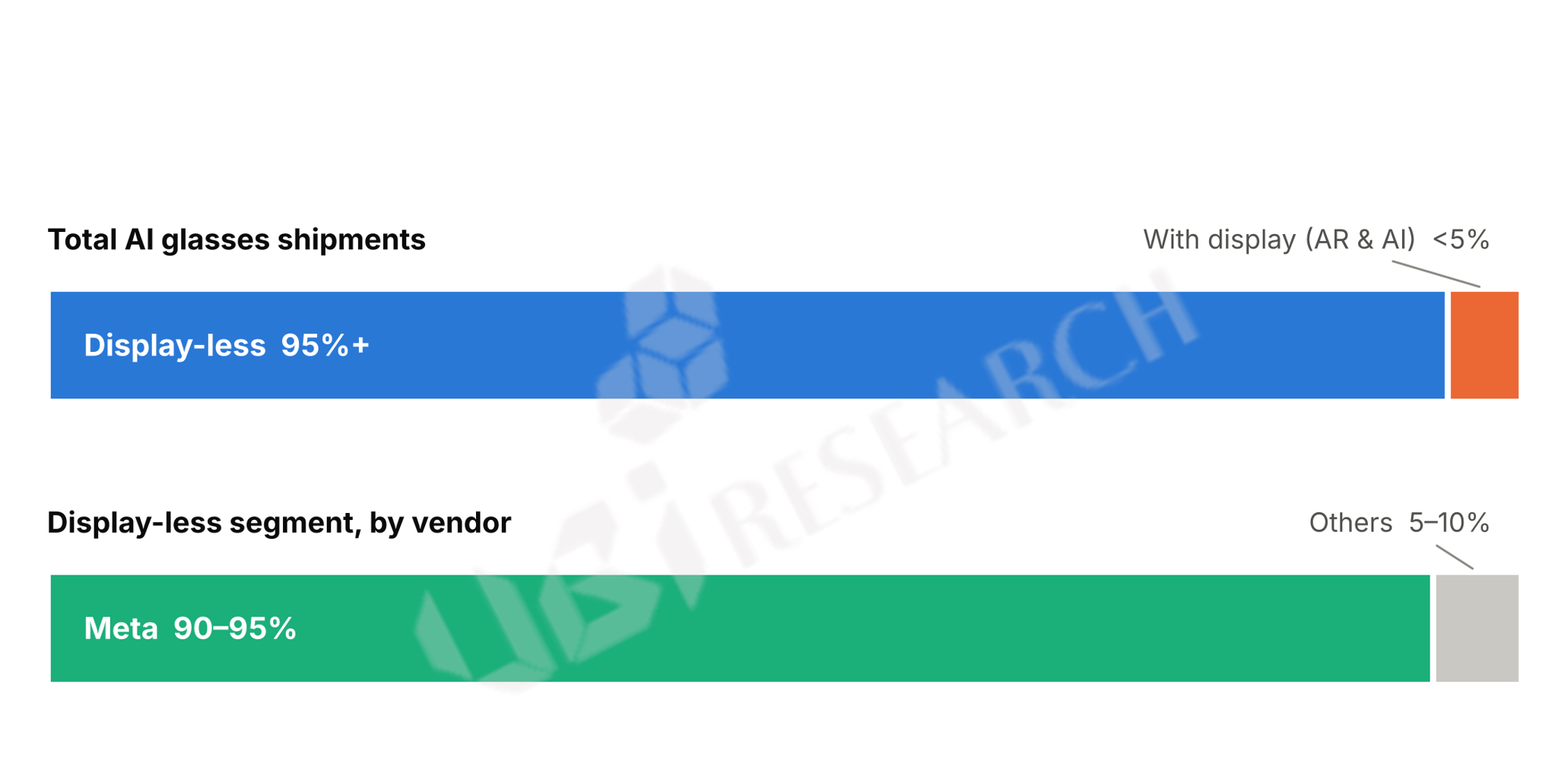
Figure 4. Global AI Glasses Shipment Mix, H1 2026 / Note: Approximate values. Source: industry data, compiled by UBI Research.
In the display-equipped segment, Rokid (若琪) leads with a share of around 40%, and Chinese companies such as Alibaba (阿里巴巴) and INMO (影目) are leading new product launches. The strength of Chinese companies is attributed to a relatively mature component supply chain.
At Connect 2026, Meta announced the third-generation Ray-Ban Meta (up to 9 hours of battery), camera-free audio-only glasses and Ray-Ban Meta Display with expanded country availability, extending its lineup to more than 100 models. It is also expanding production capacity. In January, Bloomberg reported that Meta and EssilorLuxottica were discussing raising annual production capacity to more than 20 million units by the end of 2026, and were considering more than 30 million units depending on demand.
Competitors are entering one after another. Samsung will launch its first Android XR AI glasses, developed with Google, Gentle Monster and Warby Parker, in November. Two models, SM-O200P and SM-O200J, are registered with the FCC. The first products have no display, and heavy AI processing is handled by a connected Galaxy smartphone. Google has presented a roadmap to release audio-only and monocular display glasses in 2026 and binocular display glasses in 2027. Apple’s display-less glasses (N50) are likely to launch in 2027. In China, Alibaba Quark AI glasses, Rokid, TCL RayNeo (雷鸟创新), Xiaomi (小米) and Baidu (百度) are competing.
Assessment: The AI glasses market is growing quickly, but since most of the volume consists of display-less products, it does not translate directly into microdisplay demand. It is reasonable to expect the real turning point in display demand after 2027, when Google’s binocular glasses and Samsung’s color display glasses arrive. Samsung has asked Samsung Display to develop ultra-small color microdisplays of 0.2 inches or less, and a launch of the corresponding product in late 2027 is being discussed.
- High-Performance VR/MR: Rising Prices and the Spread of Micro-OLED
Valve Steam Frame, announced in November 2025, saw its schedule slip several times due to component supply issues before its official price was revealed on September 14. The 256GB model costs $1,059 and the 1TB model $1,299, with Half-Life: Alyx included. It drives 2,160×2,160 LCDs per eye at 72–144Hz (144Hz is an experimental mode) and features 16GB of memory and pancake lenses. Valve originally said it would price the device below Valve Index ($999), but surging memory and storage prices pushed it past $1,000. Steam Machine, launched in June, also came in higher than expected at $1,049. On October 9, Valve said it would send purchase invitations to reservation holders in sequence through the end of the year or into 2027.
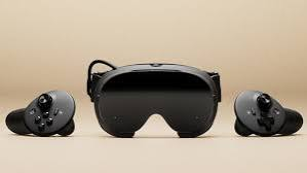
Figure 5. Valve Steam Frame with controllers (Image: Valve)
Samsung Galaxy XR (launched October 2025) uses 1.3-inch Micro-OLED with a resolution of 3,552×3,840 per eye. Sony was initially the sole supplier, but Samsung Display entered mass production in November 2025 and became the second supplier. As a result, a structure of Micro-OLED for premium MR and LCD for value VR is solidifying. Meanwhile, Meta VR Glasses is bringing Micro-OLED into the $1,300 price range, pulling down the price point at which Micro-OLED is adopted.
- Optical See-Through AR: A Battle of Field of View and Optical Efficiency
At AWE 2026 (June 16), Snap unveiled Specs, its first consumer AR glasses, at $2,195. It is a standalone design that works without a puck or cable, weighing 132g with the 47mm frame and 136g with the 52mm frame. The display combines LCoS and waveguides to provide a 51° field of view, and battery life is about four hours in mixed use. Shipments will target the United States, the United Kingdom and France this fall. However, resolution and peak brightness have not been disclosed.
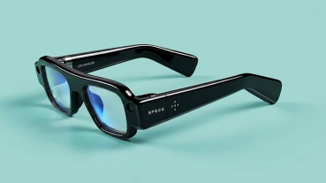
Figure 6. Snap Specs (Image: Snap)
The X3 Pro from China’s TCL RayNeo combines binocular full-color Micro LED with nano-etched waveguides to achieve 76g. Google is reportedly applying Micro LED technology from Raxium, which it acquired in 2022, to its display glasses. XREAL Aura’s prism approach secures a 70° field of view at the cost of see-through transmittance and front thickness. In short, waveguide-based designs prioritize wearability at around a 50° field of view, while prism-based designs prioritize a 70°-class field of view and image quality.
- Platforms and Chipsets: Qualcomm Concentration and Co-processor Differentiation
Except for Apple, most major XR devices use Qualcomm chips. Meta VR Glasses and XREAL Aura carry the same Snapdragon Reality Elite in their pucks. Snap Specs uses two Snapdragon processors, one for computer vision and one for running Lenses. Samsung’s AI glasses are reported to use the Snapdragon AR1 Gen 1. As the main SoC becomes effectively identical, differentiation between devices is shifting from the main chip to co-processors that handle sensor processing and low-latency image processing. XREAL adopted its own X1S spatial co-processor, and Pico chose a dual-chip architecture that pairs its in-house MR-dedicated XR chip with the main SoC. Pico said this enables 12ms end-to-end latency. This is the same approach as Apple’s R1.
Competition among operating systems has also become clear. The Meta VR Glasses puck runs the same operating system as Quest 3, supporting existing Quest content as is. Google’s Android XR ties AI glasses, display glasses, wired XR glasses and headsets into a single SDK, and XREAL Aura will support Google Play and around 100 XR-specific apps at launch. Add Apple visionOS, Pico OS 6 and Valve SteamOS, and five platforms are now competing. As hardware specifications converge, the content ecosystem and the maturity of AI assistants (Meta AI, Gemini, Siri) will have a greater influence on purchase decisions.
- Analysis from Display and Component Perspectives
7.1 Micro-OLED Supply Chain: Chinese Companies Take the Lead
Each Meta VR Glasses unit uses two SeeYA (视涯科技) Micro-OLED panels (0.91-inch, 2,560×2,560 resolution).
7.2 Samsung Display’s RGB Micro-OLED Bet
At AWE 2026, Samsung Display showcased a 1.3-inch RGB Micro-OLED rated at 40,000 nits. Unlike conventional W-Micro-OLED , which uses white OLED with color filters, it directly patterns RGB to raise luminance and efficiency. Samsung Display is pursuing a 12-inch RGB Micro-OLED line at its A2 fab with a capacity of 3,000 wafers per month at a cost of about KRW 300 billion, targeting mass production in 2028.
It should also be noted that 40,000 nits is a panel-level figure. The optical efficiency of pancake lenses is not high, and that of waveguides is far lower. Therefore, the luminance a user perceives at the eyebox is only a fraction of panel luminance. The bottleneck of XR displays is now shifting from panel specifications alone to system efficiency including optics. The value of high-luminance RGB Micro-OLED will ultimately be decided by how much optical loss it can make up for.
Table 2. Display & Optics Map by XR Segment
| Segment | Main Display | Optics | Examples | Key Bottleneck |
| Premium MR/VR | Micro-OLED (W+CF → RGB) | Pancake | Vision Pro, Galaxy XR, Meta VR Glasses, Pico Space Pro | Panel cost; eyebox luminance after optical loss |
| Value VR | Fast LCD | Pancake | Steam Frame, Quest 3 | Contrast, black level, weight |
| Tethered OST glasses | Micro-OLED (Sony) | Prism | XREAL Aura | Vertical FOV, see-through dimming |
| Standalone AR | LCoS / Micro LED | Waveguide | Snap Specs, RayNeo X3 Pro | Optical efficiency, FOV, power |
| Display AI glasses | LCoS / Micro LED (≤0.2″) | Waveguide (mono → bino) | Ray-Ban Meta Display, Android XR display glasses | Outdoor brightness, cost, size |
Source: UBI Research analysis based on public announcements and press reports.
- Implications and Outlook
- Settling of the $1,000–1,300 price range: Prices from Meta, XREAL and Valve have converged in this range. If memory prices keep rising, new 2027 products will also find it hard to move out of this range. Ultimately, shipment growth will depend more on the persuasiveness of content and usage scenarios than on price cuts.
- Dependence of Micro-OLED demand on a single product: Growth in Micro-OLED volume in 2027 depends heavily on initial sales of Meta VR Glasses. SeeYA’s follow-on orders are also said to be tied to sales performance. Demand forecasts that rely on this product should be interpreted as conditional.
- Challenges for Korean display makers: Samsung Display has secured second-source supply for Galaxy XR and RGB Micro-OLED technology, but its target for large-scale RGB Micro-OLED mass production is 2028. In the meantime, Chinese companies such as SeeYA are building mass-production experience and cost competitiveness with Meta volumes. Whether it can seize the opportunity in 0.2-inch-class ultra-small color displays will be the next battleground.
- Timing of the shift from AI glasses to display glasses: Current growth is led by display-less products. A full-scale expansion of microdisplay and waveguide demand is expected after 2027, when Google’s binocular glasses, Samsung’s color display glasses and Apple’s next products are launched.